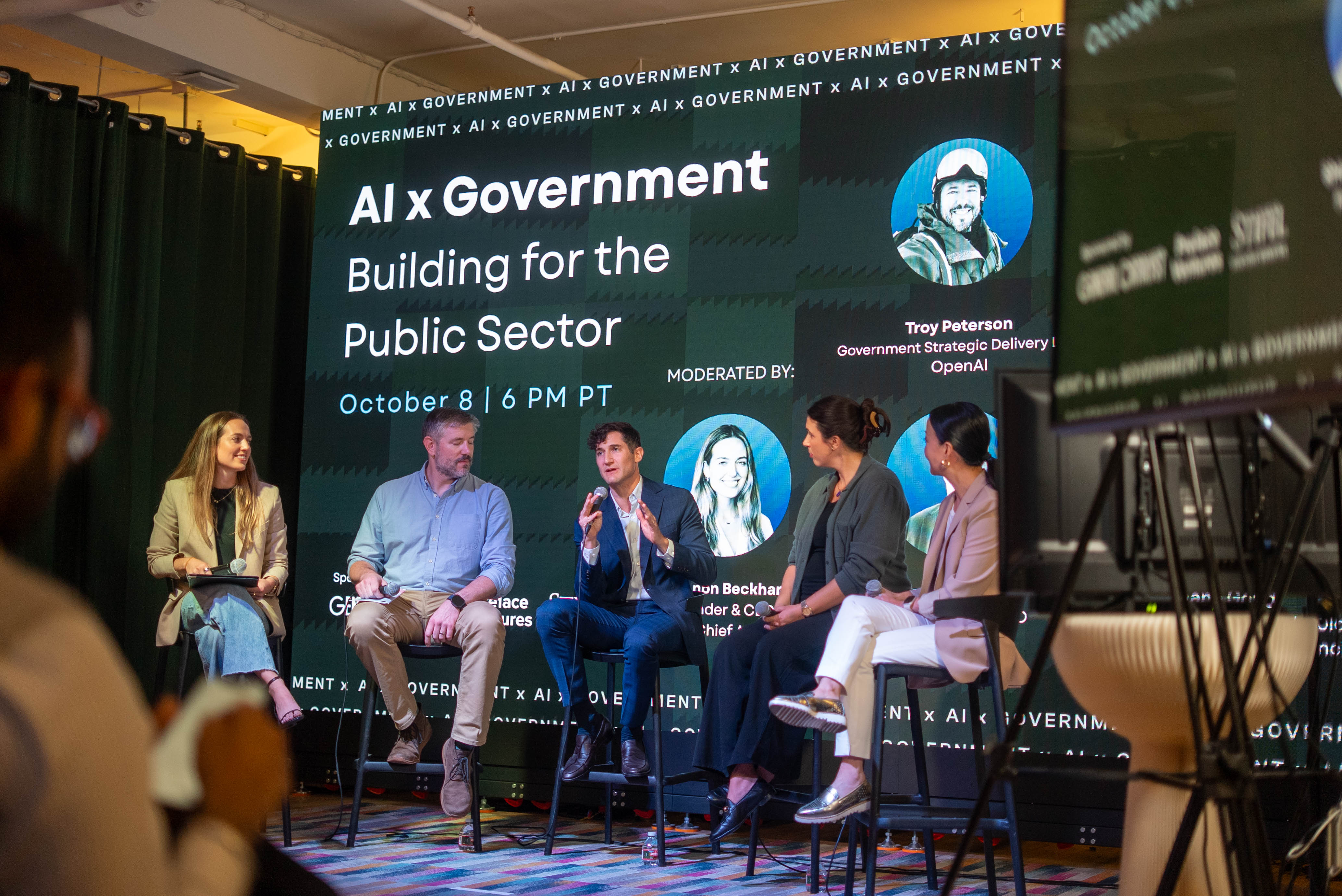

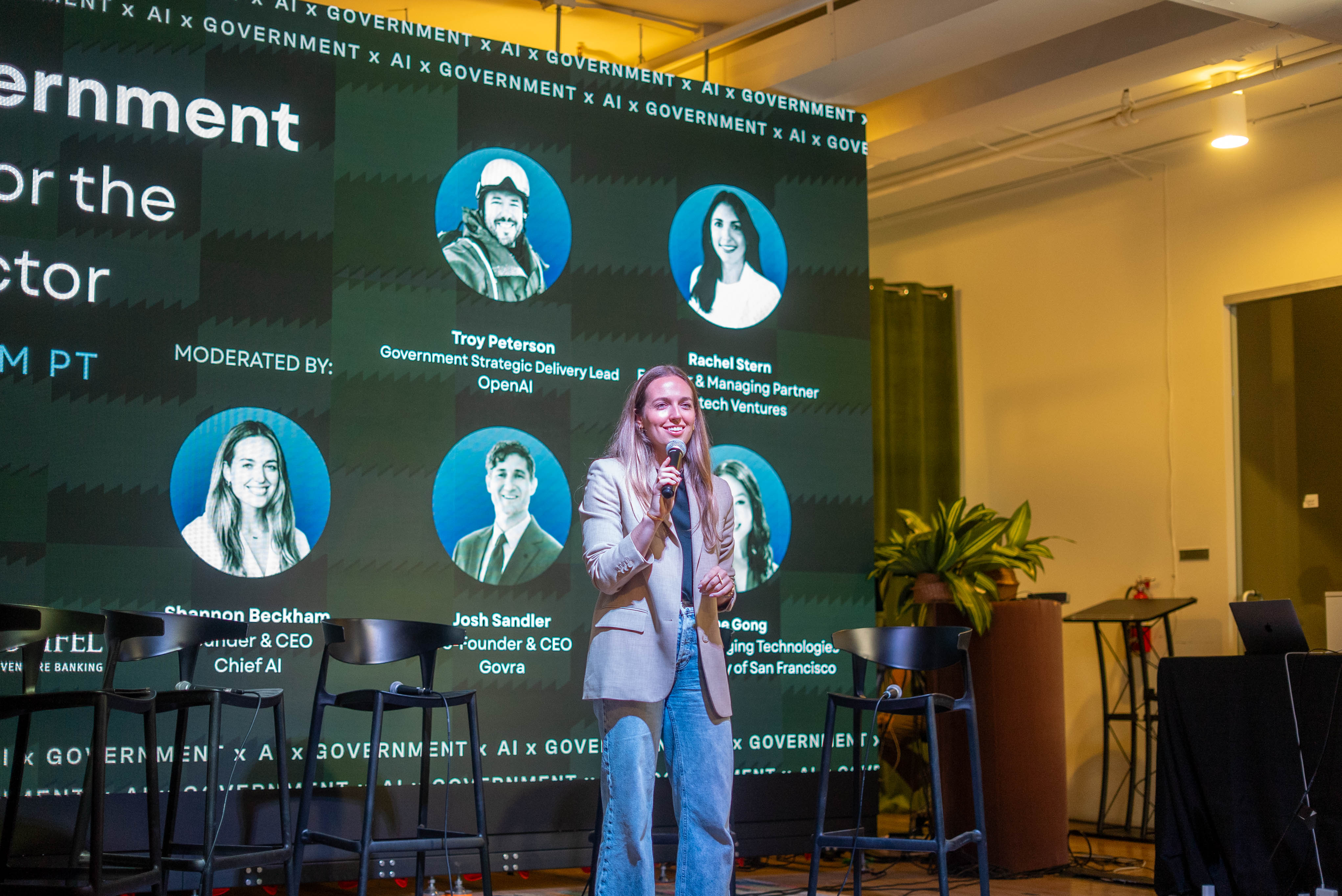
At San Francisco Tech Week 2026, Chief AI brought back its annual event with AI x Government: Building for the Public Sector, featuring a panel discussion and networking reception to build the govtech community on Thursday, October 8.
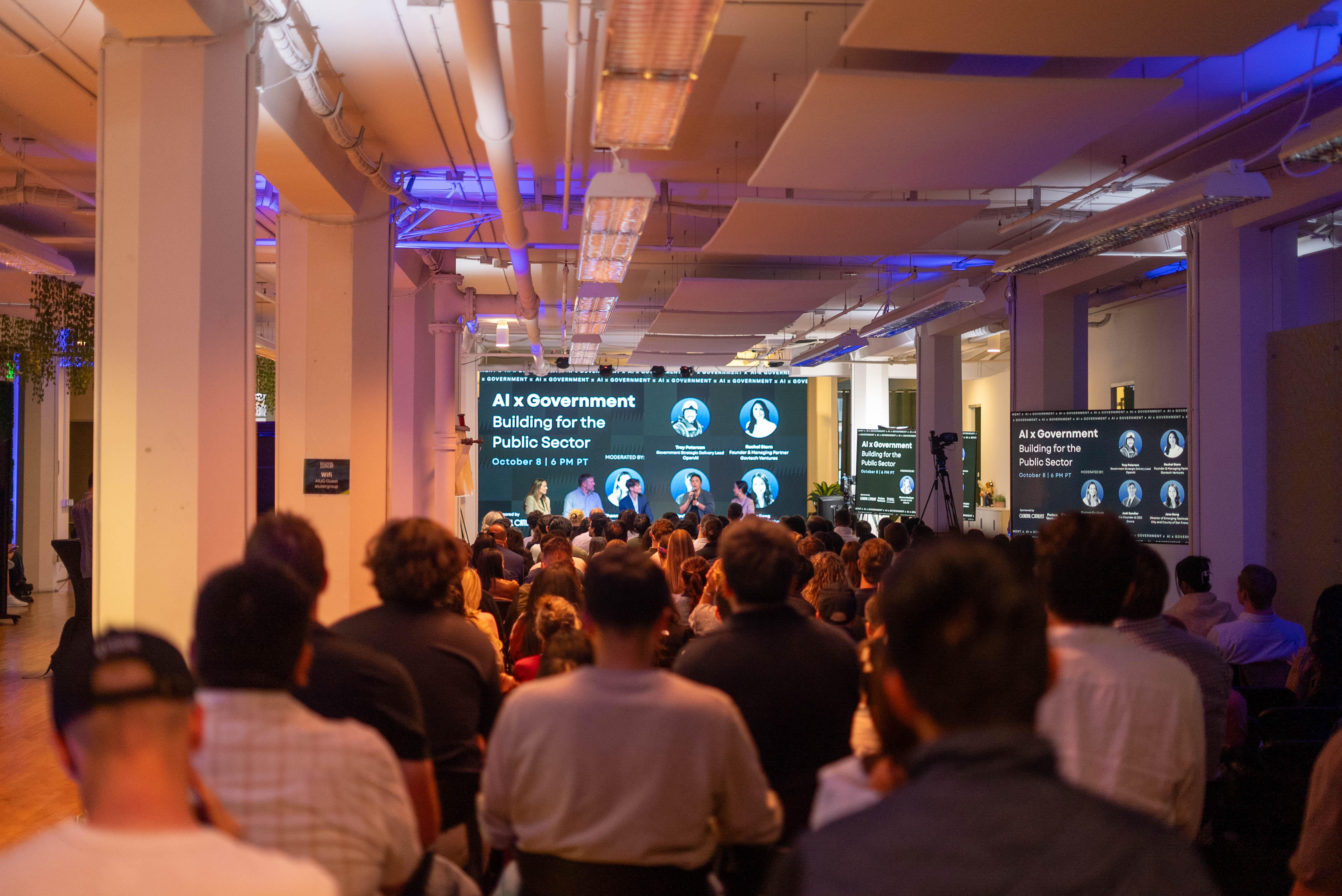
With more than 250 attendees – from a list of 800 requested signups! – the evening drew founders, operators, policymakers, procurement officials, investors, and journalists from across the Bay Area's growing govtech ecosystem. Last year, the conversation centered on what it takes to modernize government in the AI era. This year, the discussion dug deeper: AI is already changing how fast a city responds to residents, how public money is spent, and how decisions affecting millions of lives get made. The question now is how it gets built, bought, and used effectively.
Every startup selling AI to government eventually meets the same people: the official who has to approve it, the city that has to run it, and the investor asking whether any of it renews. This year's panel put all of them in the same room.
A Panel Covering Every Perspective
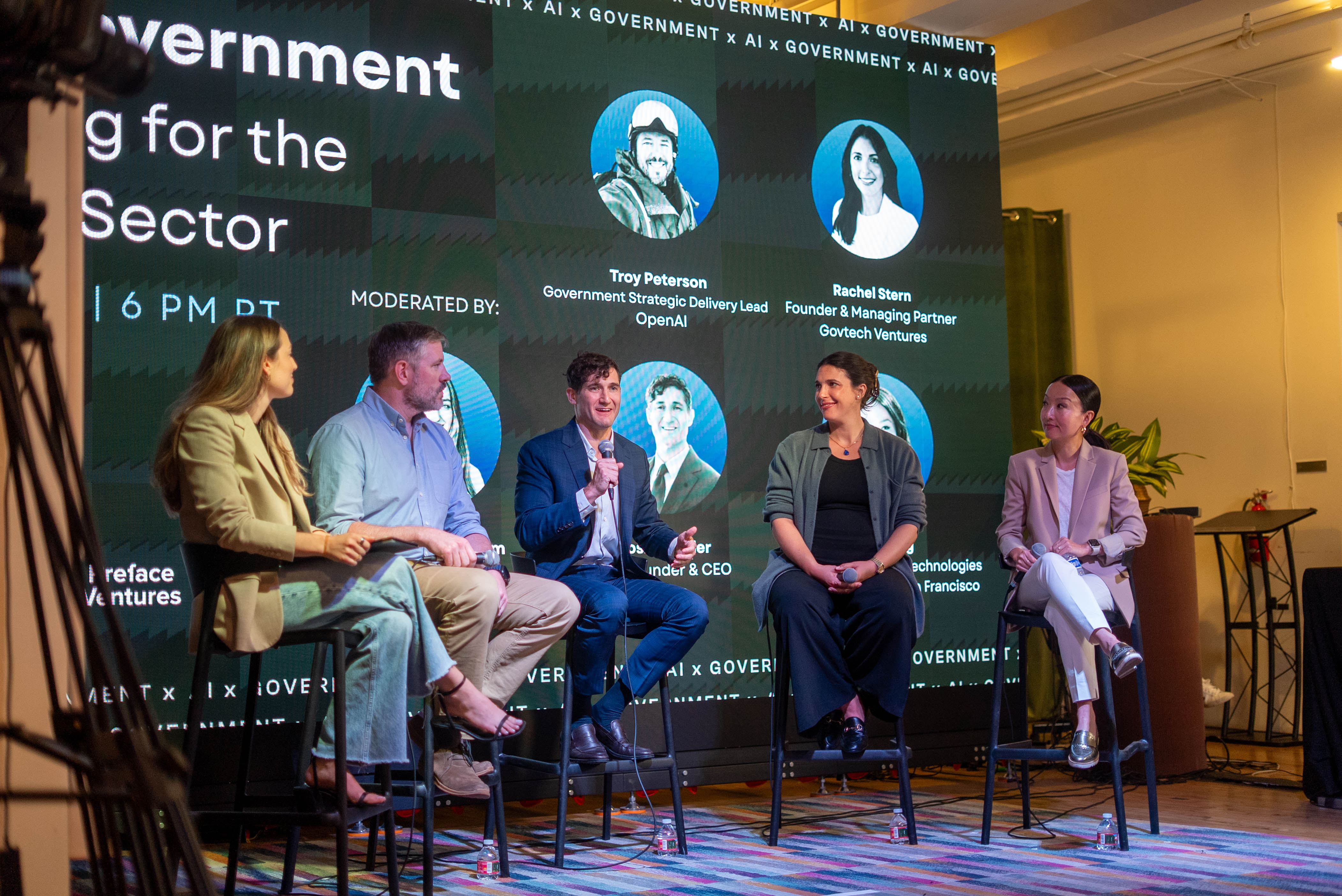
The panel brought together perspectives across the ecosystem: a frontier AI lab, a city leader, a startup selling into agencies, and an investor backing the next generation of govtech companies.
The discussion was moderated by Shannon Beckham, Founder and CEO of Chief AI. Having sat on both sides of the table as a government employee then startup founder, she kept the conversation grounded in what happens when government buys and uses new technology.
Troy Peterson, Government Strategic Delivery Lead at OpenAI, brought the view from inside a frontier lab. His work begins after the contract is signed: getting complex deployments live and making sure agencies see results. He spoke about how building for government differs from building for the private sector, how agencies should evaluate model providers, and how open versus closed models, safety, and risk factor into those decisions.
Jane Gong, Director of Emerging Technologies for the City and County of San Francisco, shared the buyer's perspective. San Francisco ran a six-month generative AI pilot with more than 2,000 city employees, who reported productivity gains of up to five hours per week, and then rolled out Microsoft 365 Copilot Chat to roughly 30,000 city employees, which is one of the largest local government AI deployments in the country. Jane spoke to what's working, the lessons from the city's "try before you buy" approach to procurement, and what she wishes vendors did differently.
Josh Sandler, Co-Founder and CEO of Govra, offered the founder's view. Govra builds AI-powered operating systems for government agencies, starting with property tax administration through its Truetax product. Josh argued that the question is no longer whether government should adopt AI, but how quickly government can adapt. He also made the case that more builders should be working on these problems.
Rachel Stern, Founder and Managing Partner of Govtech Ventures, returned to the stage to share the investor's lens. Her thesis focuses on state and local government, where strong retention and low churn make for durable businesses. She spoke to what separates govtech companies that last from those that stall, the go-to-market mistakes she sees founders make, and why early traction in government looks different than it does in the private sector.
What We Heard
A few themes ran through the conversation:
- Moving past the pilot. Pilots can open the door, but the harder work is getting from a successful pilot to a signed contract to a renewal. That transition takes proving value to the people doing the work and the residents they serve.
- Build vs. buy is a real question now. AI makes it cheaper than ever for governments to build in-house. Specialized vendors win when they go deeper on a specific problem than general-purpose tools can.
- Bringing the workforce along. Adoption depends on public servants seeing AI as leverage for their work, not replacing them. Training and a clear value proposition matter as much as the technology.
- Trust and accountability. When public money and public trust are on the line, responsible AI means transparency, clear evaluation of model providers, and teams who stay accountable for AI-assisted work.
- Data is still the foundation. Much of government data remains messy or analog, and the companies that help digitize and standardize it are laying the groundwork for everything else.
The evening closed with audience Q&A and a rapid-fire round, where panelists shared their favorite AI tools, predictions for AI in government a year from now, and one piece of advice for the builders in the room.
The Road Ahead
At Chief AI, we see AI x Government as part of a broader movement to bridge the gap between innovation and public impact. The opportunity in front of this community is enormous and so is the responsibility to get it right.
We're grateful to our extraordinary panelists and to everyone who joined us. If you're building, buying, or funding AI for the public sector, we'd love to keep the conversation going.
Thank You to Our Partners
A huge thank you to our sponsors – General Catalyst, Preface Ventures, and Stifel Venture Banking – for making the evening possible. And thank you to Digital Jungle for hosting us in a space built for bold conversations about the future of public innovation.